
Notes
The Game That Bankrupted Its Own Lesson
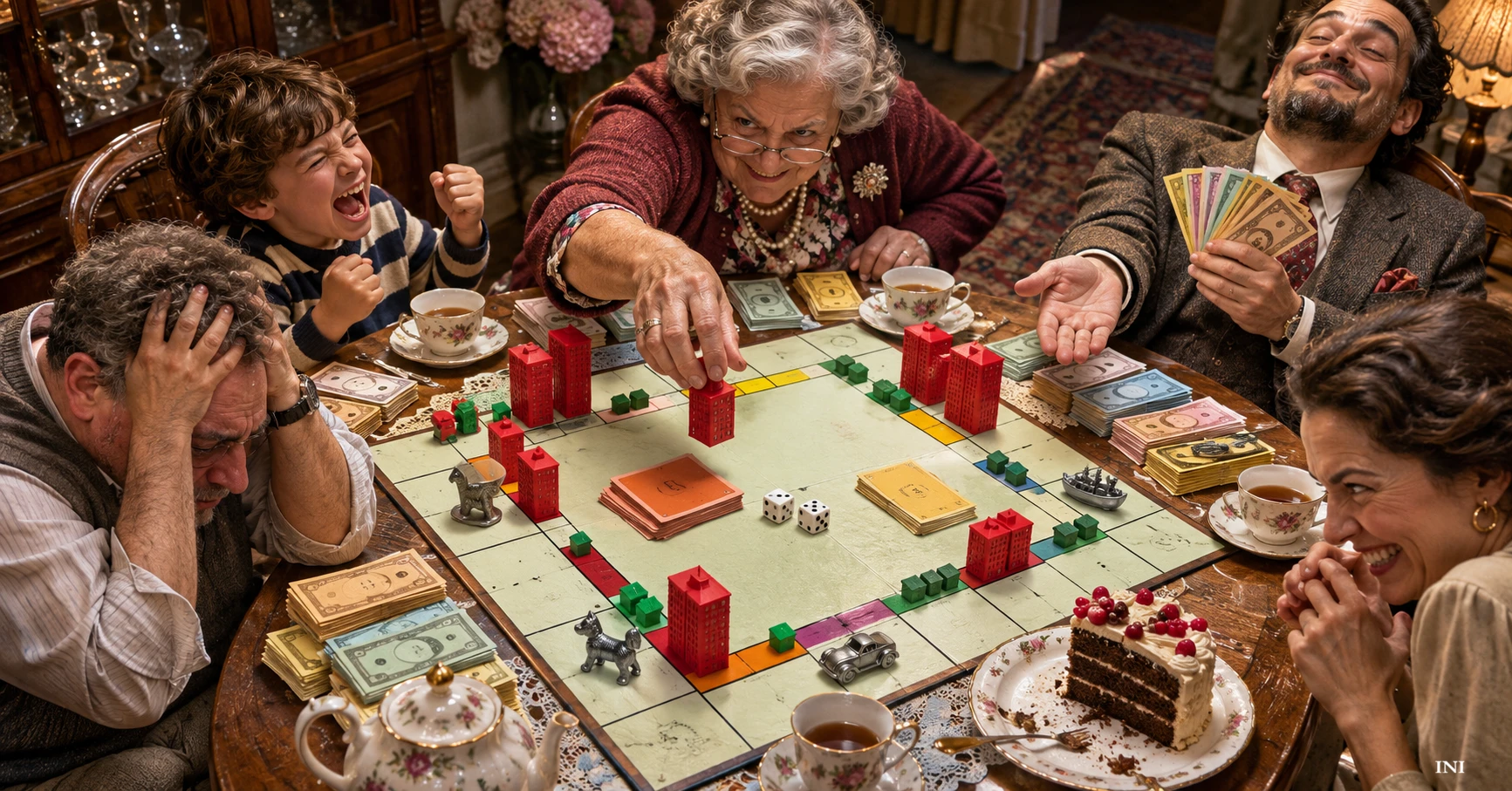
The family gathered around the table. There was cake, tea, and a modest amount of affection. Half an hour later, Grandma was building a property empire, the child was celebrating his uncle’s bankruptcy, and Dad was collecting rent with the satisfaction of a man who had finally seen justice served. Elizabeth Magie had something quite different in mind. In 1904, she patented The Landlord’s Game to show what happens when wealth concentrates in fewer hands. She even devised rules under which everyone could share in the prosperity. Humanity considered the options and decided it was more entertaining if only one person got rich. Preferably at everyone else’s expense. By 1935, Monopoly was a Parker Brothers success story. A social warning became family entertainment, greed became strategy, and delight in other people’s misfortune became the path to victory. Few educational tools have proved so effective. In one afternoon, the family learned that bankruptcy happens to other people, housing is a source of revenue, and family love lasts only until someone lands on your hotel. Best of all, when the game ends, everyone turns back into a decent human being. The houses, the banknotes, and the temporarily misplaced pieces of conscience all go back into the box. The losers smile. The winner celebrates modestly. The family resumes loving one another. At least until someone suggests another round. Because people are always happy to learn from other people’s mistakes. Especially when they can acquire all their property.
Comments
Loading comments…