
Notes
The Shorter Route That Came with a Longer Bill
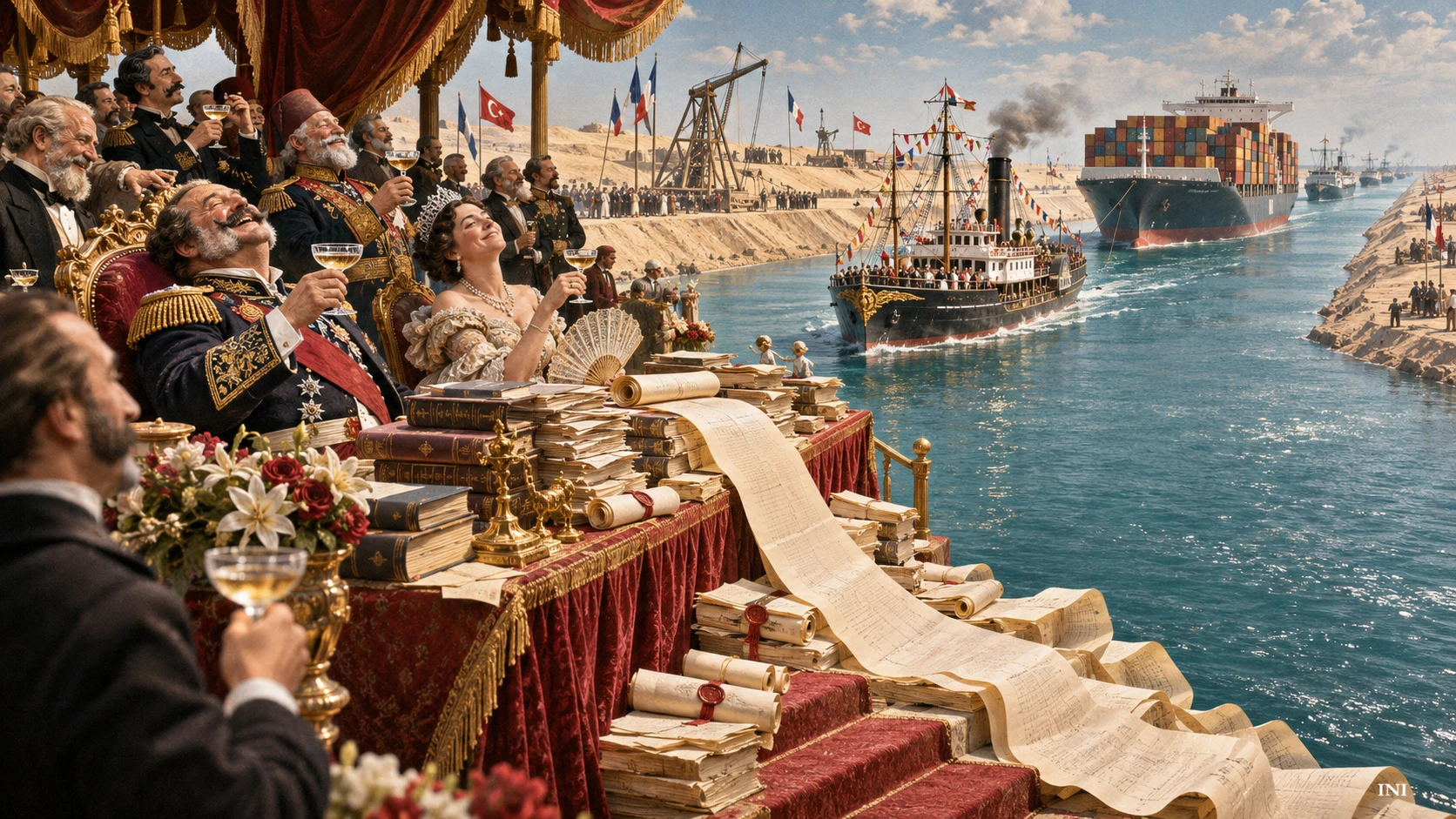
On 17 November 1869, the Suez Canal was officially inaugurated. At last, the Mediterranean and the Red Sea met. The budget met something too: reality. Construction ended up costing more than twice the original estimate. At the inauguration, monarchs, dignitaries and others accustomed to living at a safe distance from invoices celebrated progress. They cut the ribbon, but not the costs. The eternal rule of megaprojects is that the plan is always affordable, while reality insists on joining the opposition. Of course, the guests of honour had not dug the canal. Forced labourers and other workers paid a heavy price. That particular item, however, never appeared in the final accounts. Global trade soon discovered the joys of taking a shortcut. In time, it also discovered that entrusting an entire planet’s logistics to a single narrow waterway was a bolder idea than the map suggested. When the Red Sea becomes too dangerous to cross, ships sail around Africa, shipping costs rise and goods arrive late. The “just-in-time” system suddenly switches to “eventually, maybe”. A hundred and fifty-seven years have passed. We now use artificial intelligence to plan the future, yet the fate of the global economy can still depend on whether a ship makes it through a narrow passage. We’ve come a long way. The passage is still narrow.
Comments
Loading comments…