
Notes
The Cost of Saving Money
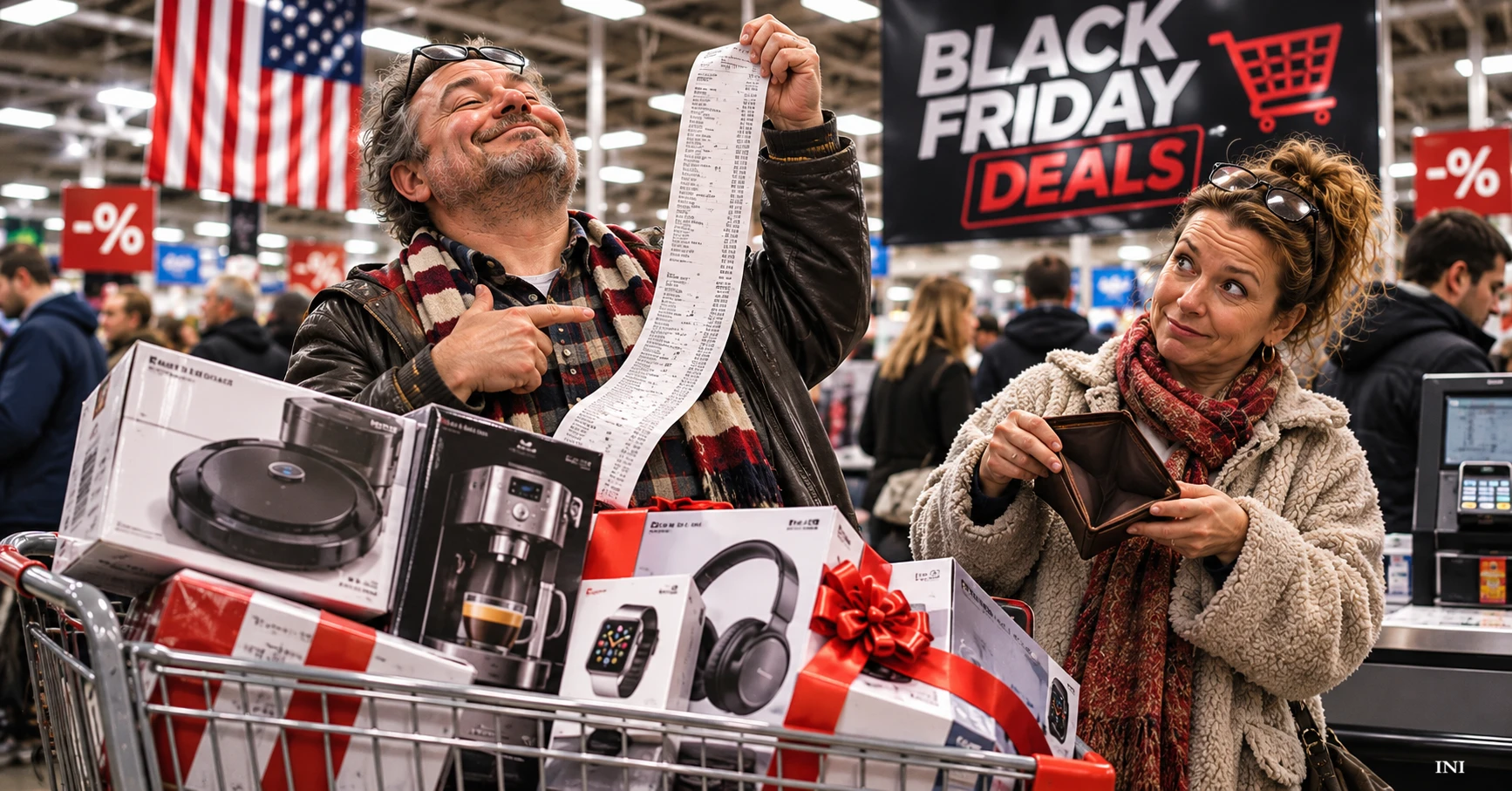
Today, 27 November, is Black Friday. The term gained currency in Philadelphia in the 1960s. What was a traffic nightmare for local police on the day after Thanksgiving eventually became a business model for retailers. That morning, a man woke up determined to save money. Retailers were more than happy to help. First, he bought a robot vacuum cleaner. His old vacuum worked perfectly well, but there was no longer any money to be saved on it. Next, he ordered a coffee machine that could make eighteen different kinds of coffee. He had been drinking espresso for twenty years and had now secured seventeen more options at a bargain price. He also bought a smartwatch that would remind him when he had been sitting for too long. After an entire morning spent browsing special offers, the need for such a device seemed scientifically established. He bought something else for thirty euros to save five euros on delivery. He could hardly justify wasting five euros. By evening, he had spent six hundred euros and saved four hundred. His wife asked where the four hundred euros were. He showed her the receipts. She showed him the bank account. Clearly, they belonged to two different schools of economics. He was not alone. Black Friday had conquered the world. Humanity finally had a universal holiday that required no shared religion, language or worldview. The money itself could be earned the following month. The next day, the man bought nothing. Unfortunately, he didn't save a single euro.
Comments
Loading comments…