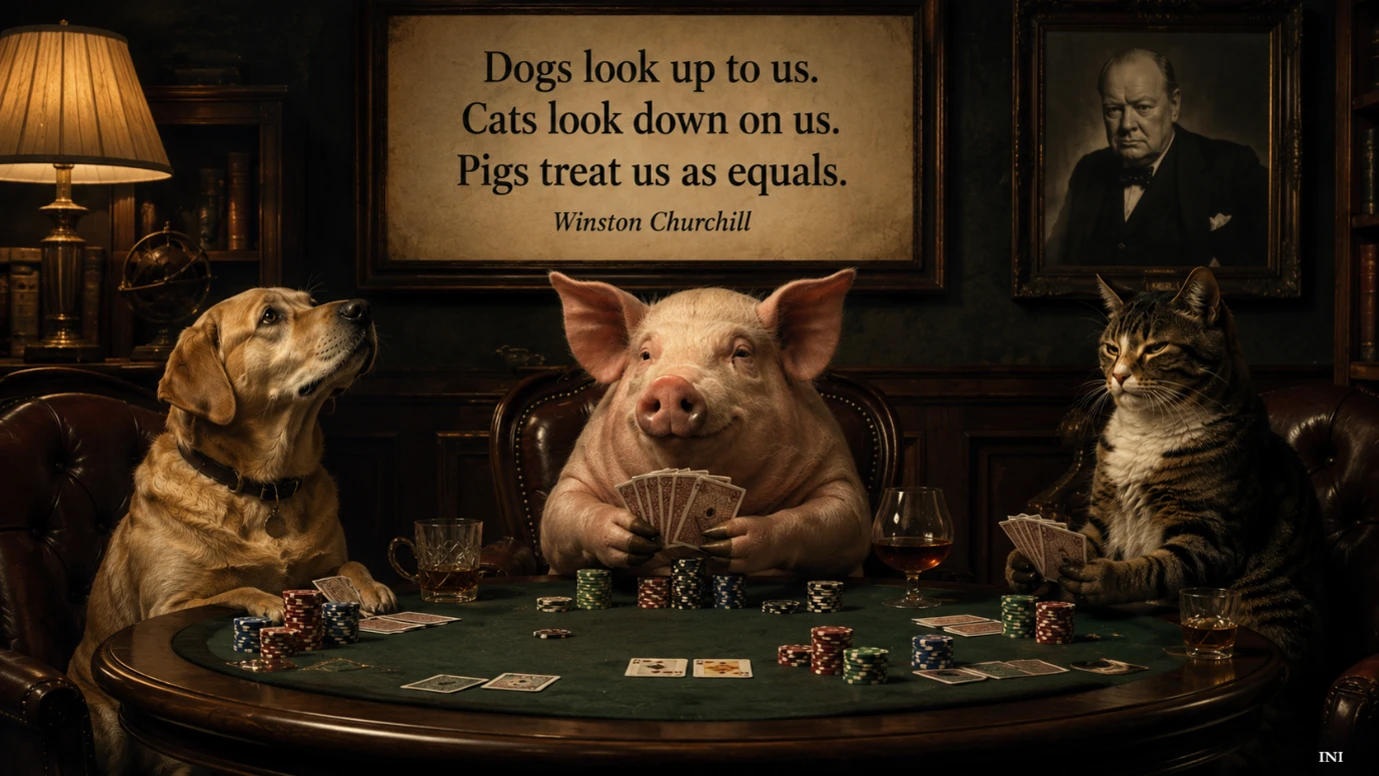
The pig has spent centuries carrying accusations it never invented: greed, filth, vulgarity, excess.
Perhaps the problem was never the animal. Perhaps it was the species doing the naming.
The Pig Was Never the Problem… turns a familiar Churchill line into a darker question about hierarchy, language, power — and the uncomfortable moment when another creature simply looks us in the eye.
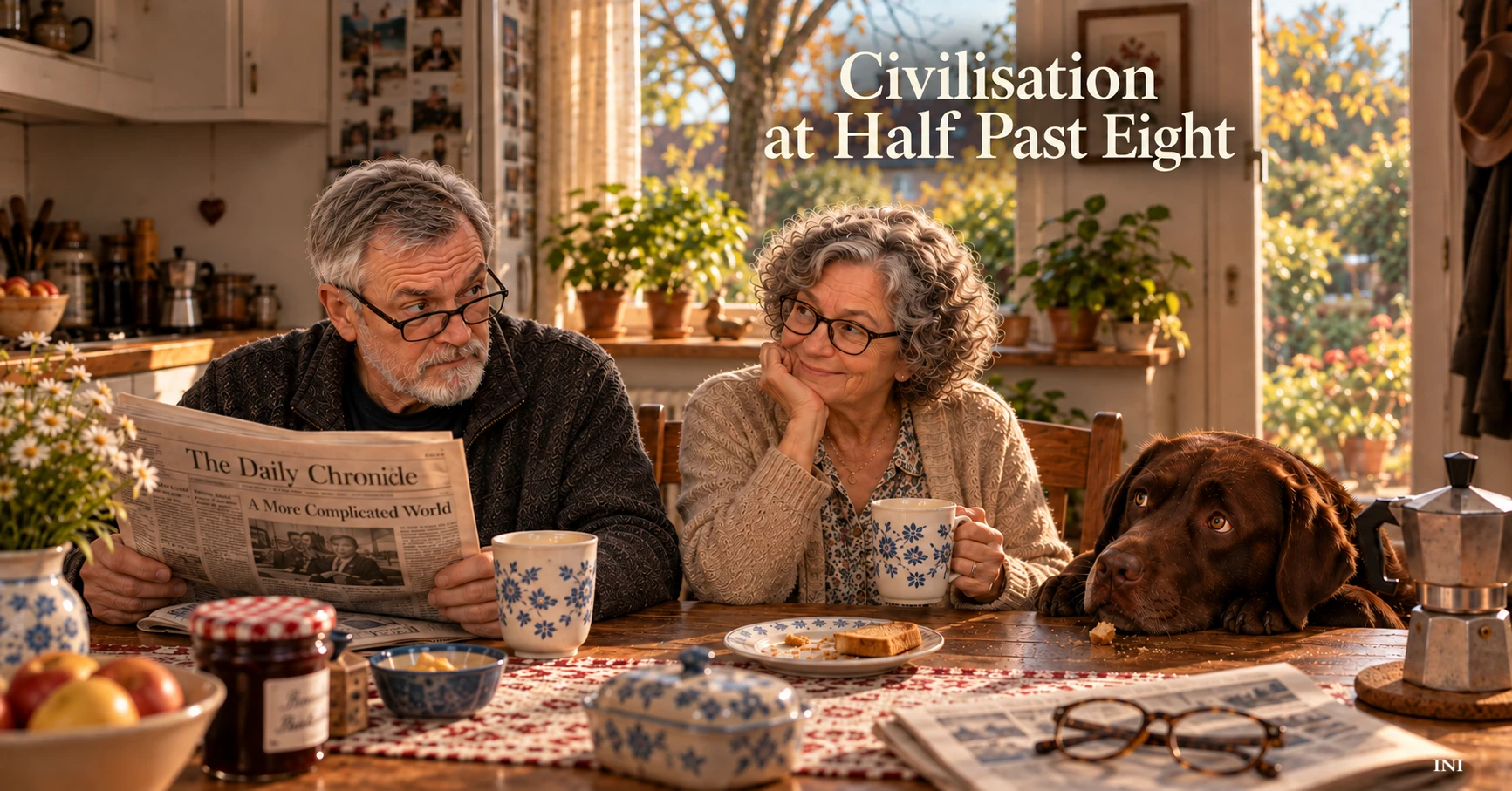
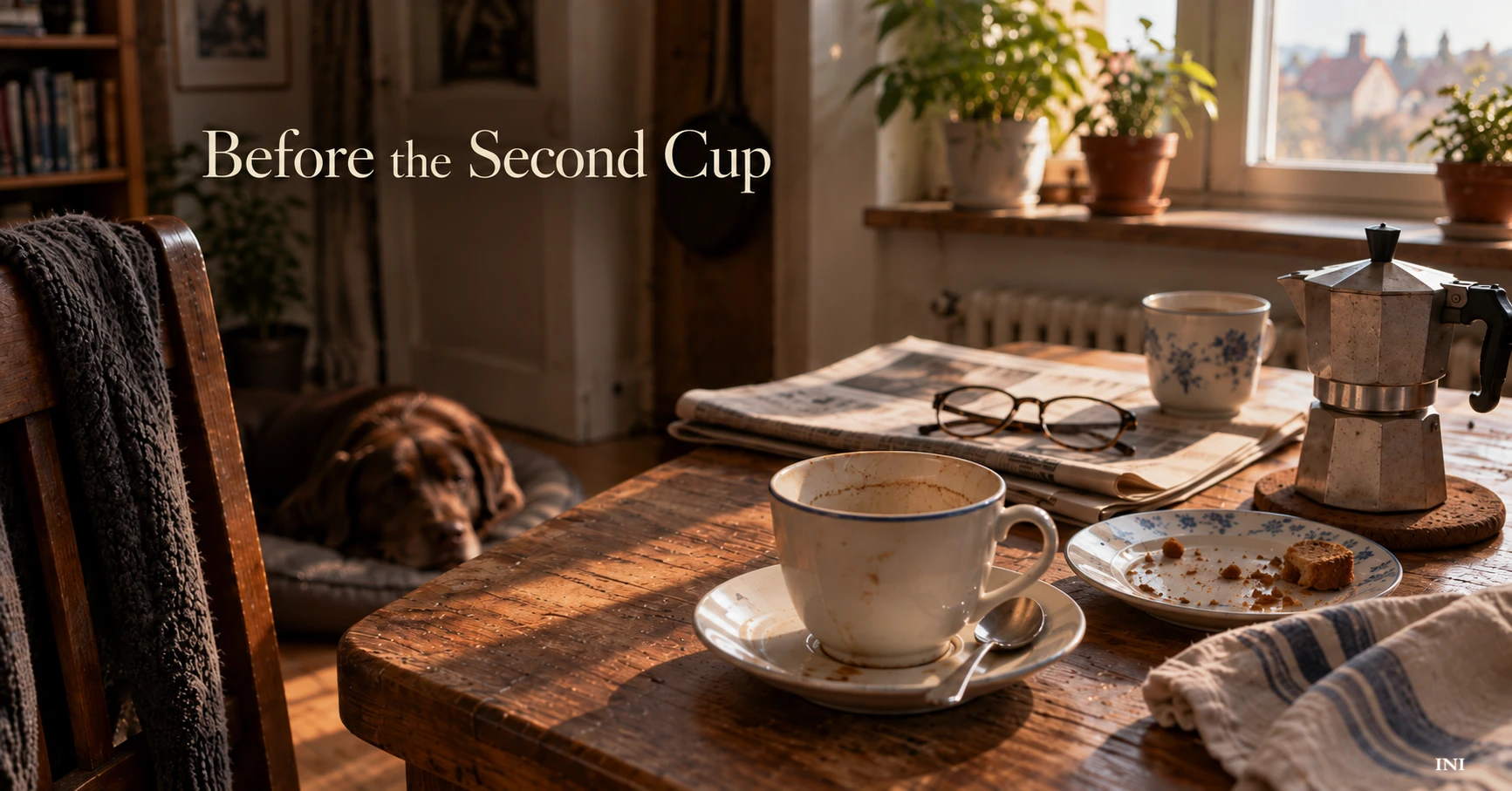
One Family, Two Generations, and a Suspiciously Innocent Labrador
A missing piece of toast. A suspicious Labrador. Two generations, one old coffee maker, and far too many opinions before breakfast is over.
Welcome to Henry and Margaret’s morning — where civilisation is still standing, just not particularly steadily.
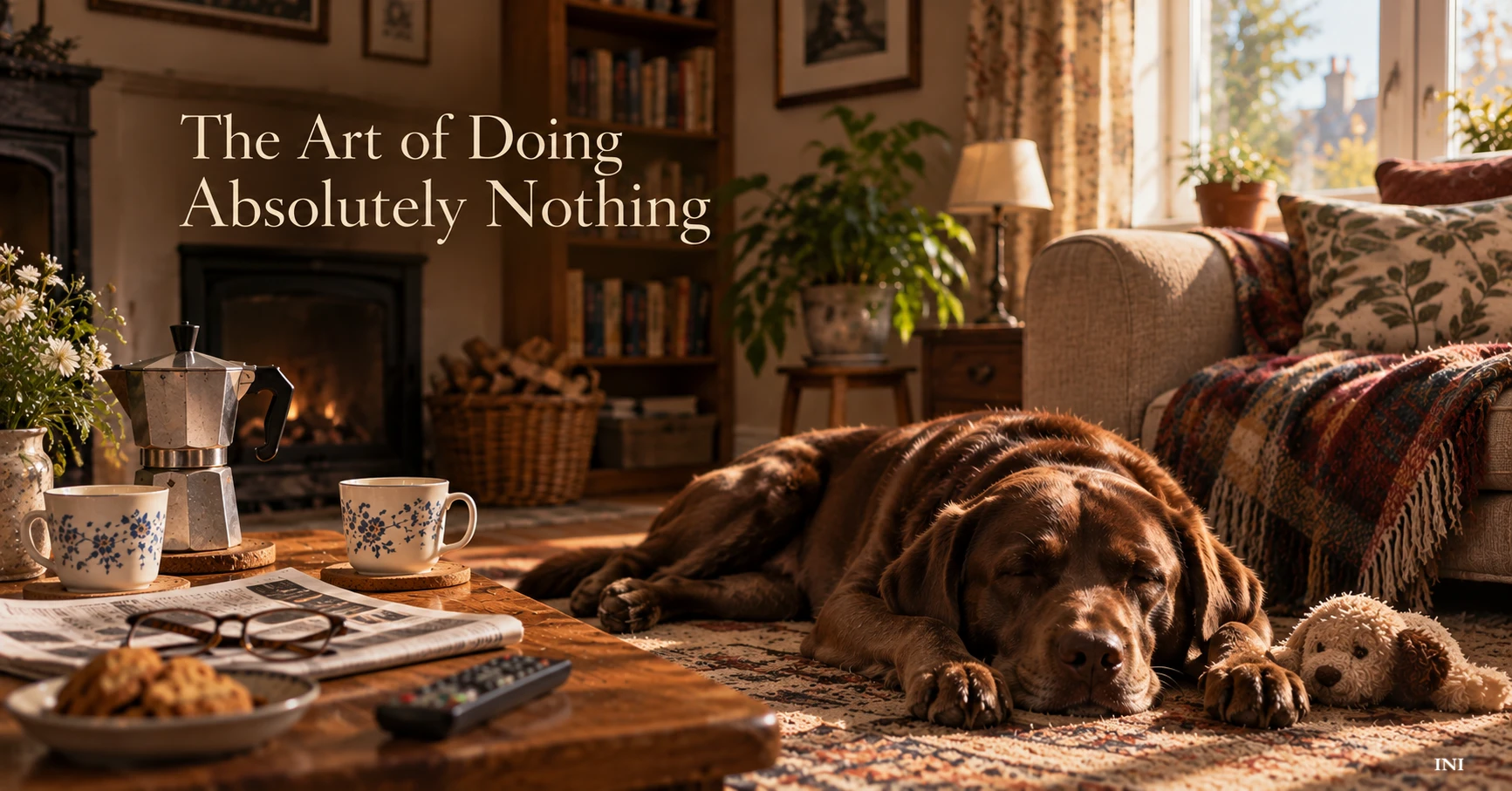
How to Waste a Perfectly Good Saturday with Purpose
Henry and Margaret have a plan for the perfect Saturday: absolutely nothing.
The problem is that doing nothing, as it turns out, takes a surprising amount of planning, discipline — and a certain talent for ignoring the outside world.
Brutus, naturally, mastered all of this years ago.
Every morning begins with coffee. Then comes Margaret.
Before the second cup, Henry has already developed a theory, Margaret has corrected it, and Brutus has quietly lost faith in humanity once again.
Welcome to the breakfast table — where marriage, modern life, and the world’s daily absurdities somehow arrive before the coffee gets cold.
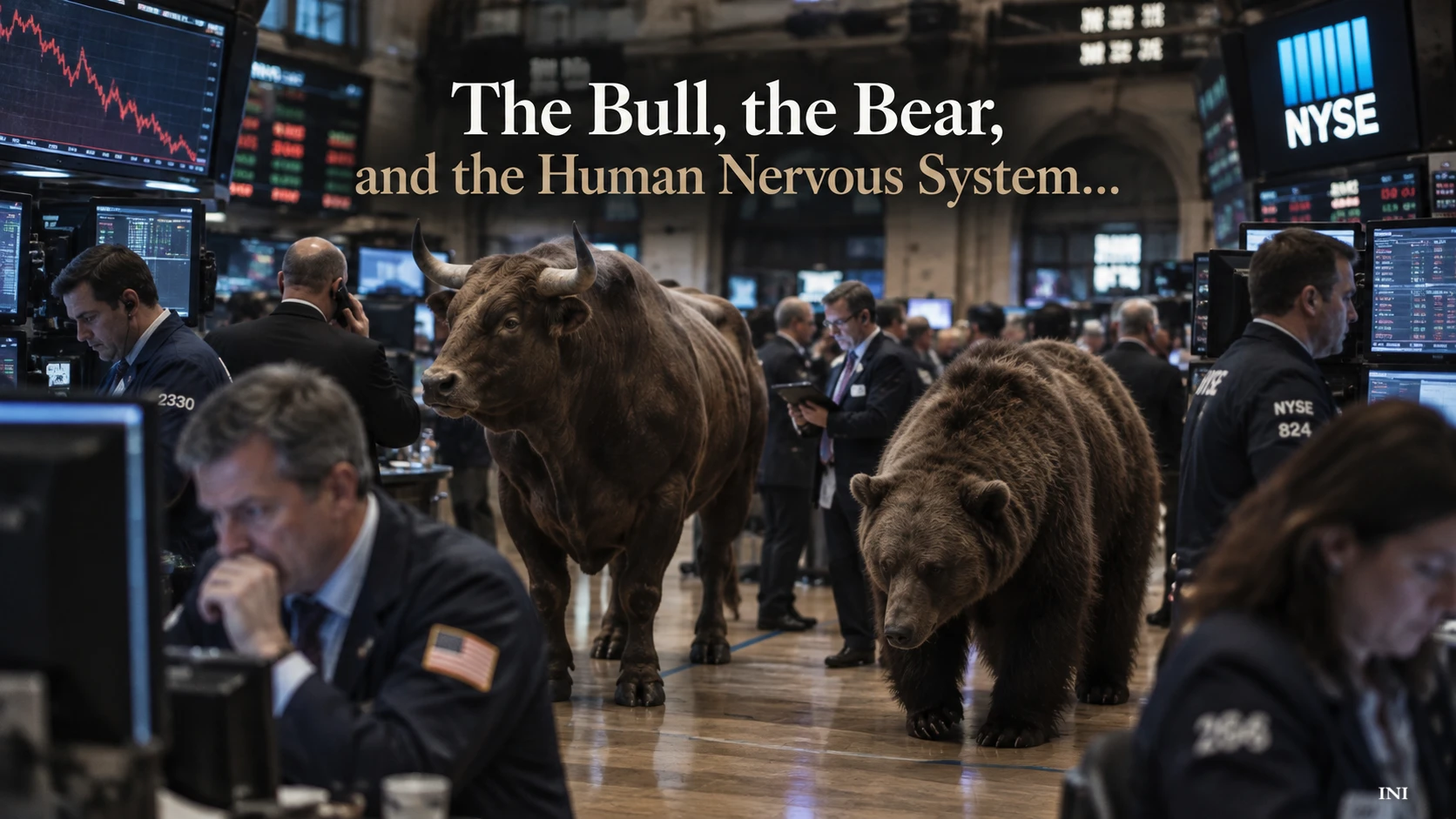
The bull became optimism. The bear became fear.
Neither animal ever asked for the job.
A satire about the human habit of giving our greed, panic and financial nerves another species’ name — and then calling ourselves the rational ones.
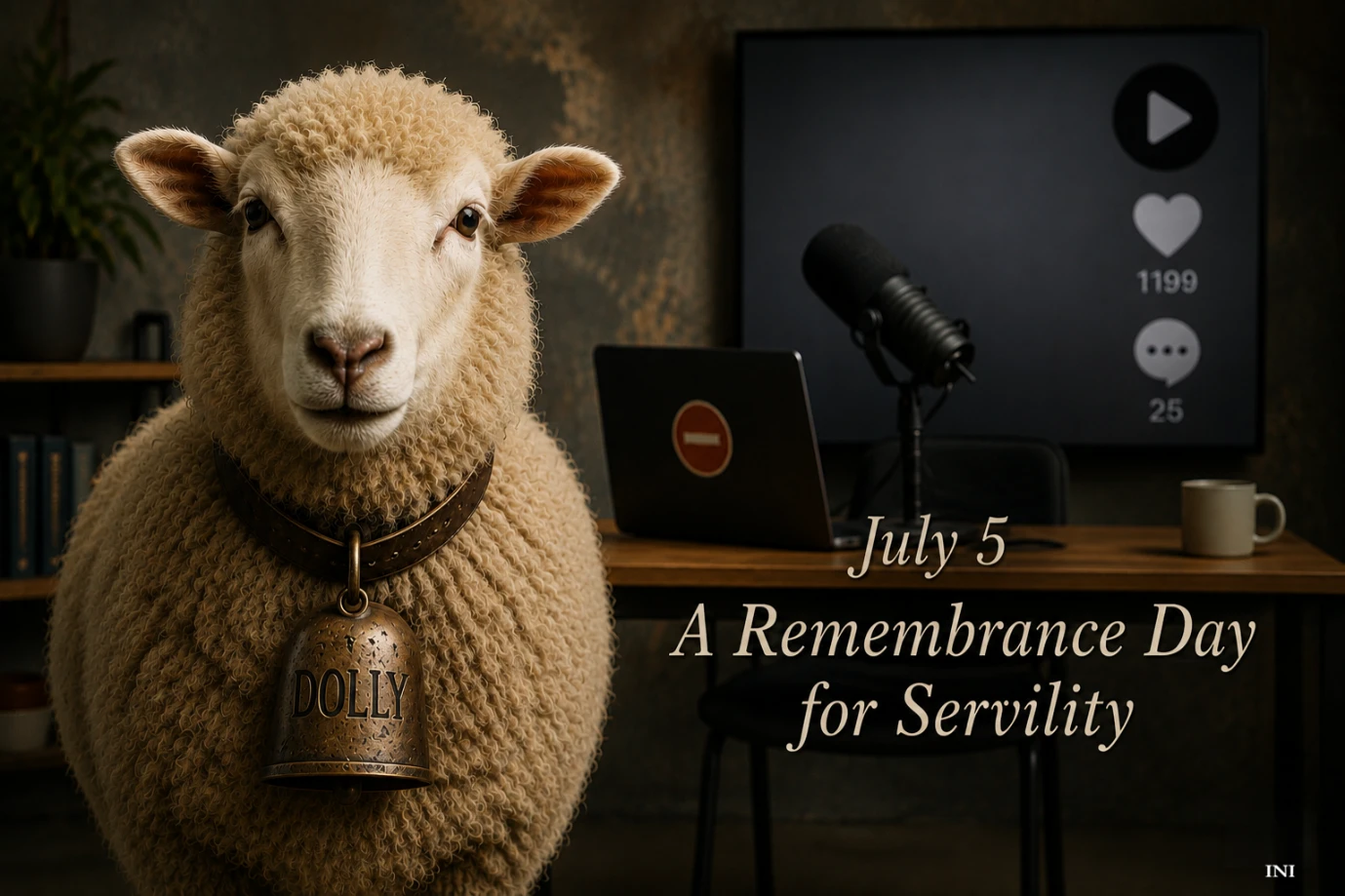
July 5, 1996 — Dolly’s birth, and the moment humanity discovered that making copies is easier than remaining original
Dolly was born a clone.
She had no choice in the matter.
We do.
We copy sentences, fears, enemies, loyalties — sometimes even our conscience. We call obedience responsibility, conformity common sense, and the comfort of the flock freedom.
The laboratory learned how to copy a sheep.
Society learned something far more useful: how to make people copy one another — and feel proudly original while doing it.
July 5 — A Remembrance Day for Servility
A satire about Dolly, political shepherds, modern flocks, and the increasingly fashionable art of thinking exactly what everyone else thinks.
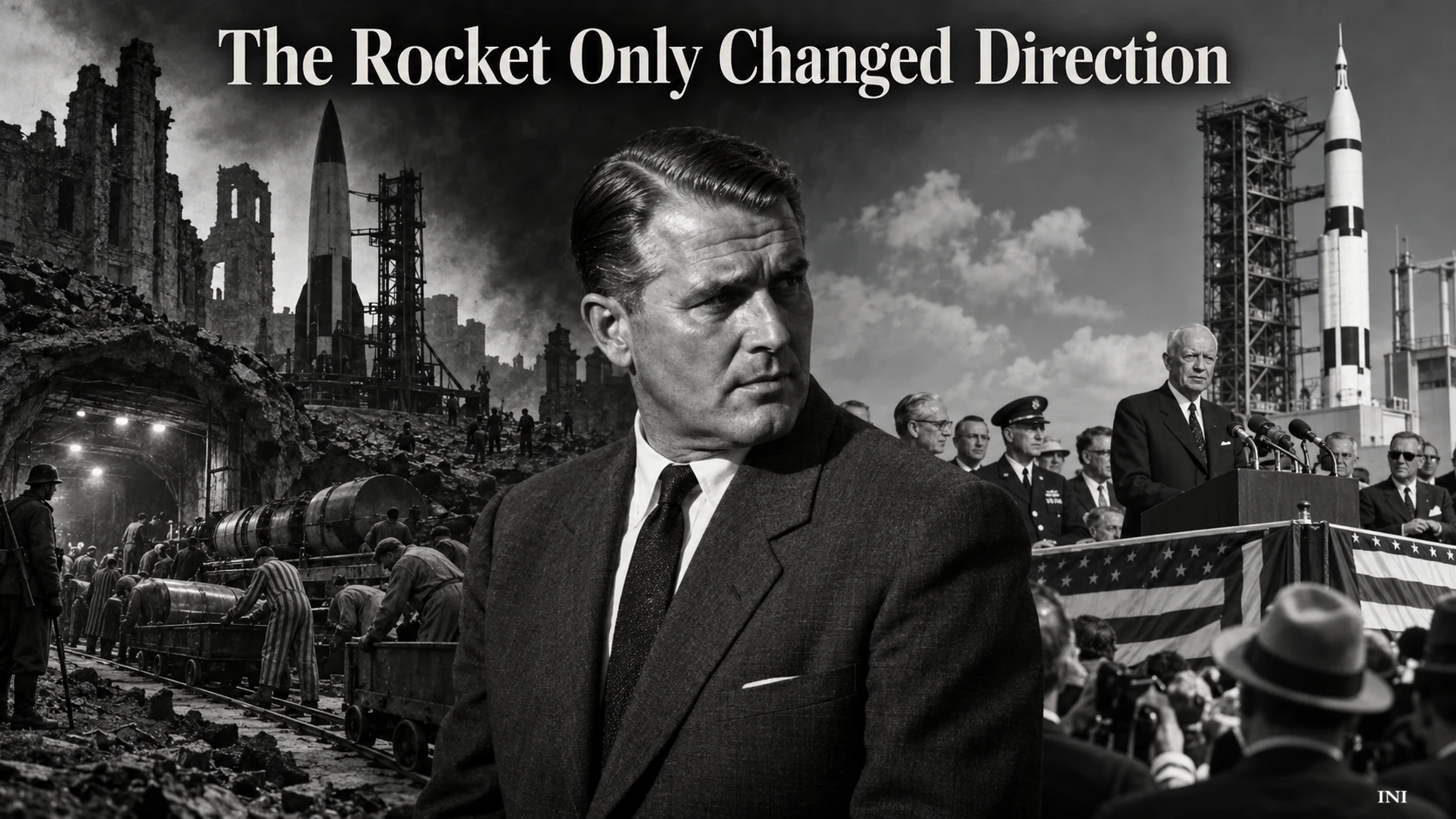
September 8, 1944 / September 8, 1960 It took sixteen years for Wernher von Braun to be reclassified from enemy scientist to American national asset.
On September 8, 1944, the first V-2 to strike London killed three people.
Exactly sixteen years later, Dwight D. Eisenhower dedicated the Marshall Space Flight Center. Its first director was Wernher von Braun — the brilliant German rocket scientist whose work had once served Hitler and would later help carry Americans toward the Moon.
The uncomfortable part is not that von Braun was given a second chance.
It is that history has never distributed second chances evenly.
Some pasts remain unforgivable. Others become complicated, nuanced, strategically necessary — usually around the moment someone discovers that the person carrying them knows how to build a rocket, open a door, secure a resource, or make himself useful to the next age.
The flags change.
The expertise survives.
Morality learns the new payroll system.
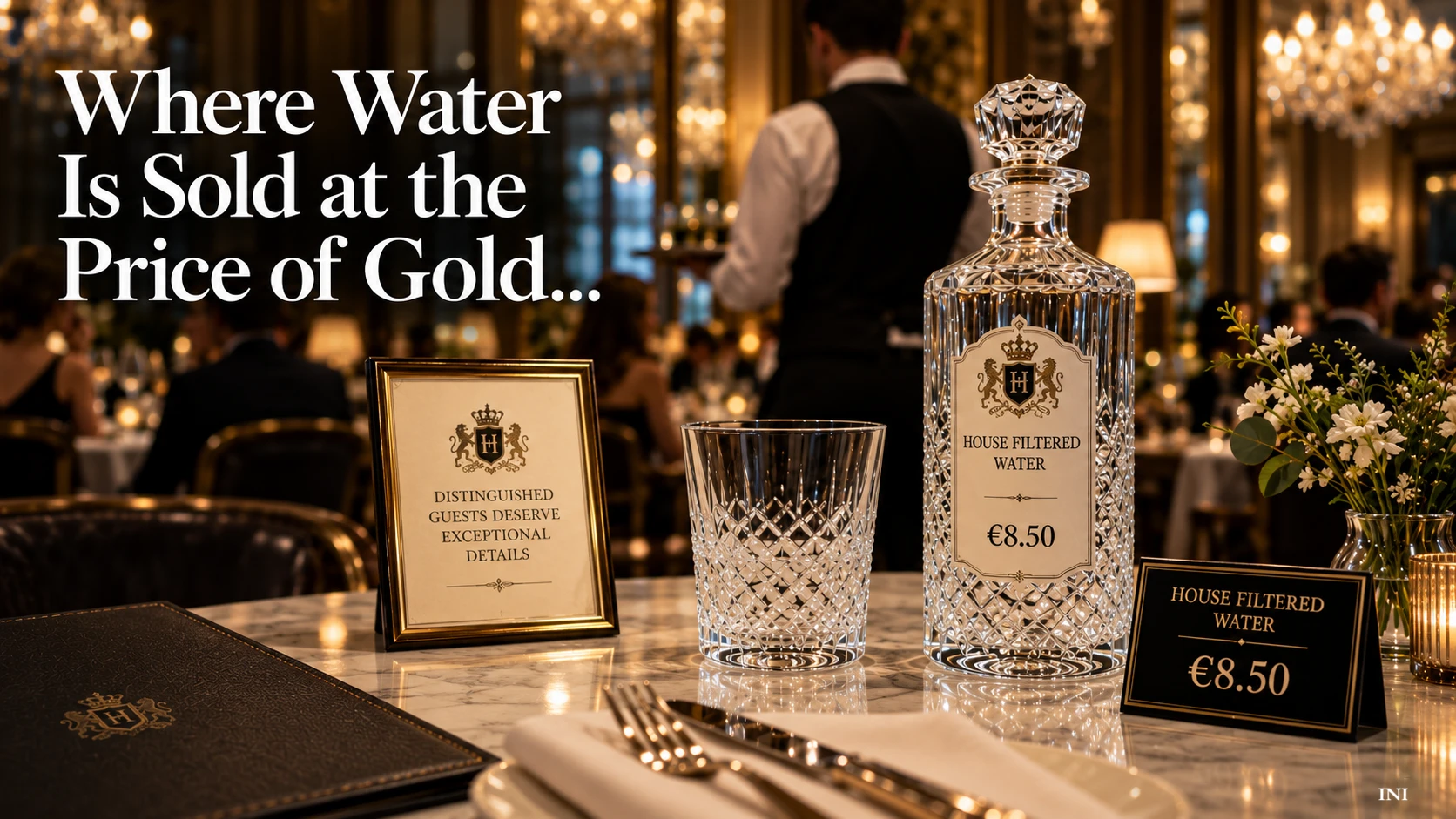
A glass of tap water used to be a gesture. Now it can be treated as lost revenue.
What happens when the most ordinary human need is repackaged, renamed and quietly removed from the list of ordinary choices? A small café encounter becomes a lesson in how easily necessity can be turned into premium experience — complete with branding, discomfort and a bill.
Because sometimes the luxury is not what they sell you.
It is being allowed to choose the ordinary.
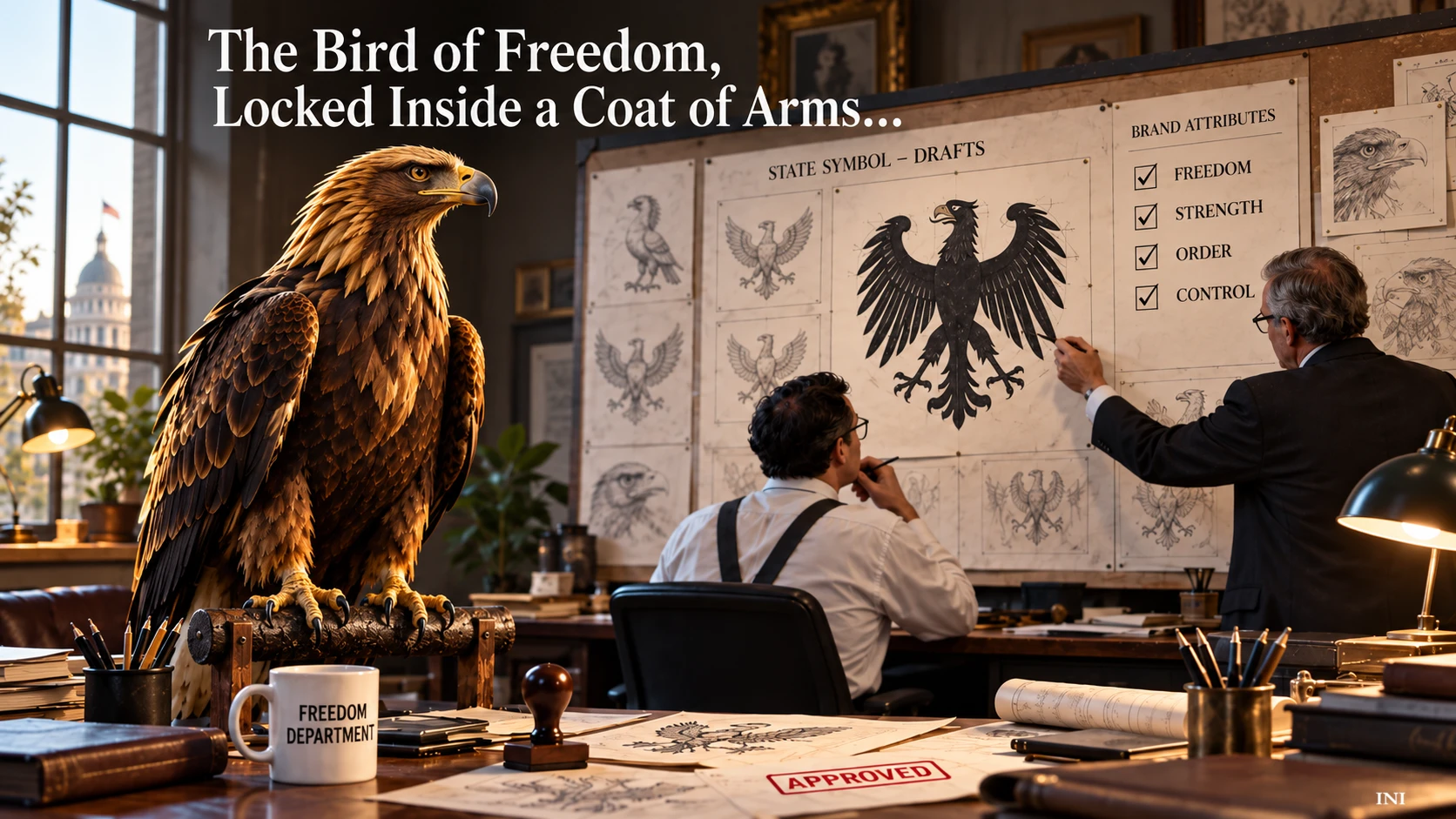
The eagle never asked to become a symbol of freedom.
It simply flew.
We were the ones who gave it meaning, placed it on flags and seals, surrounded it with power — and eventually discovered that freedom is much easier to admire once it has been properly framed, approved, and displayed.
The bird remained free.
The symbol was another matter.
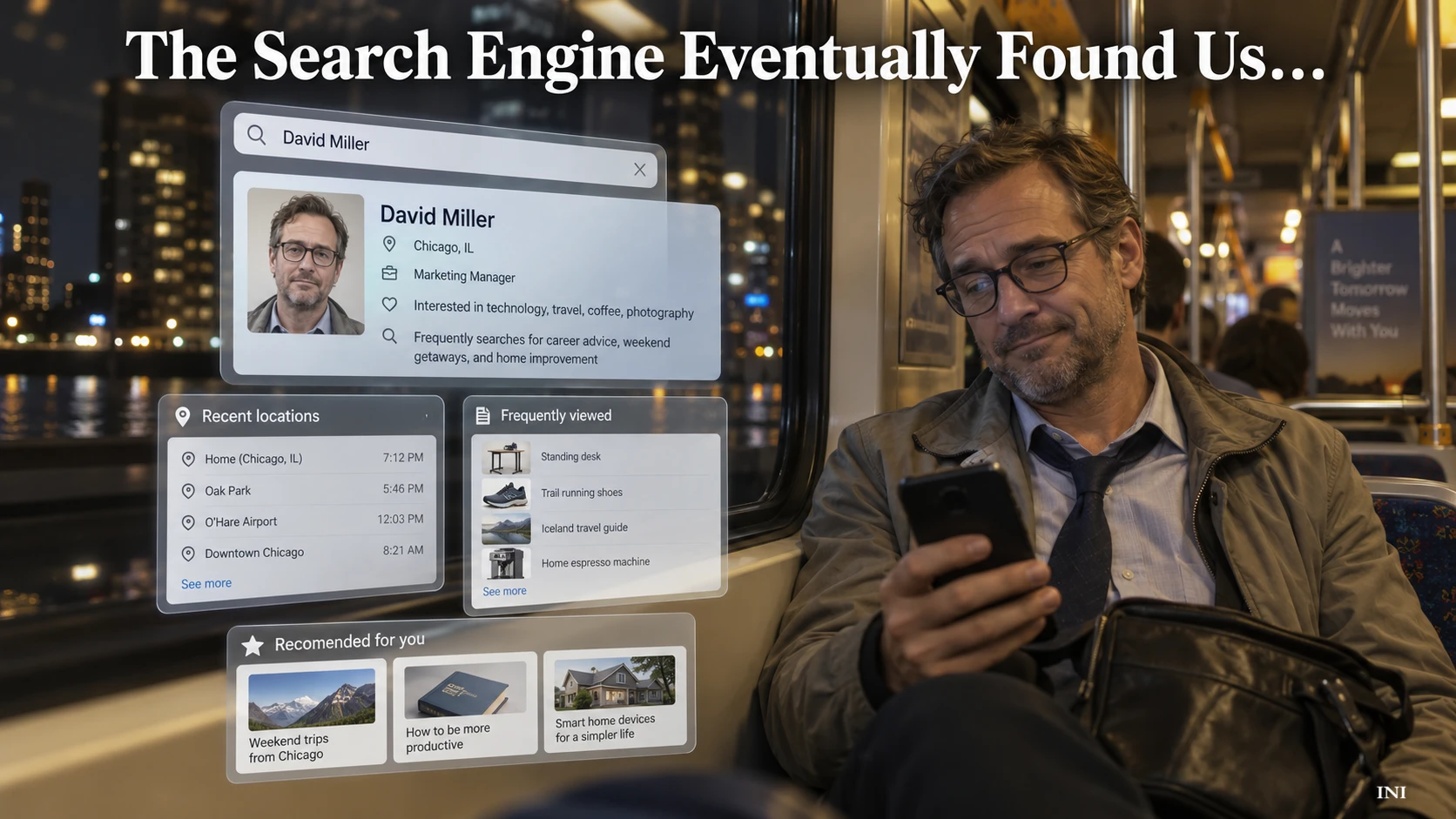
September 4, 1998 — Google is born, and humanity gains a tool for finding the world, while the world quietly gains a tool for finding us
Google began with a simple promise: help us find the world.
It worked remarkably well.
Then, search by search, the system learned what we wanted, where we went, what held our attention — and eventually what might interest us before we had thought to ask.
The strange part is not that Google became very good at finding things.
It is that, somewhere along the way, "it became very good at finding us too."
Dogs rarely interrupt. They offer no advice, no theories, no carefully prepared perspective.
They simply stay — while we explain, overthink, dramatize, and occasionally lose the leash we were holding five minutes ago.
A satire about listening, silence, and the uncomfortable possibility that the wiser end of the leash may not be ours.
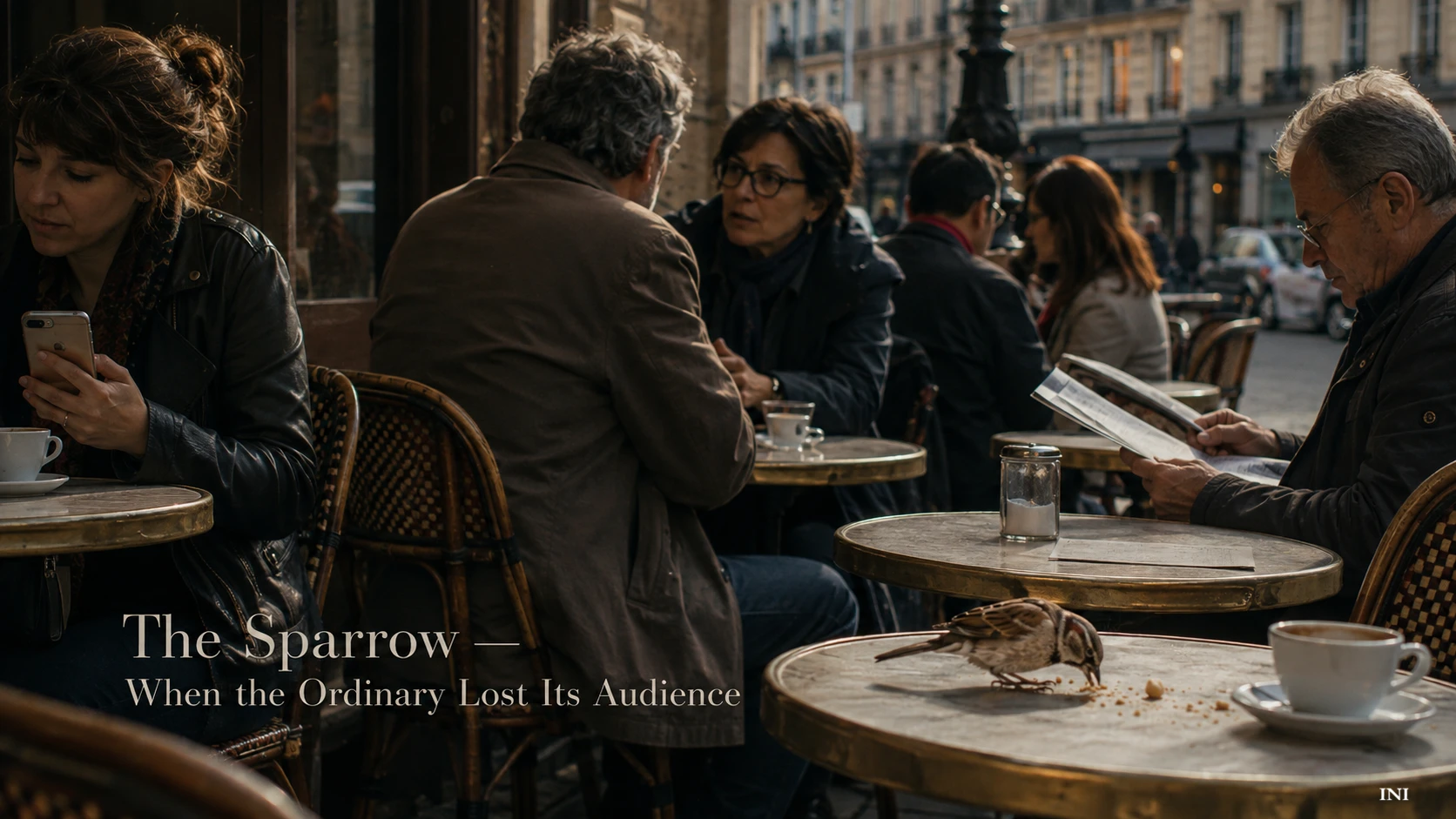
The sparrow has one serious disadvantage: it is always there.
No rarity, no scandal, no personal brand — just a small bird going about its ordinary life while the rest of us search for something more interesting to notice.
A satire about attention, familiarity, and the quiet things that become almost invisible simply because they never learned to demand an audience.
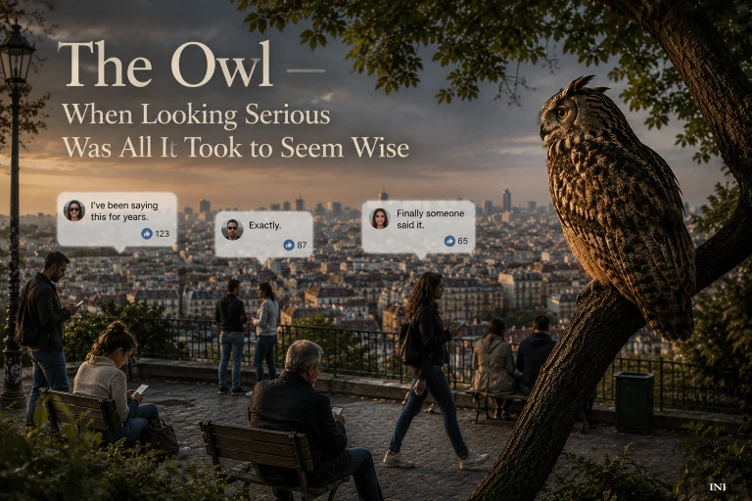
The owl has been a symbol of wisdom for centuries. Perhaps because it watches before it reacts.
We, meanwhile, have built a world in which almost everyone can publish an opinion before the facts have finished arriving.
The strange part is not that we speak so much. It is how quickly certainty begins to resemble knowledge.
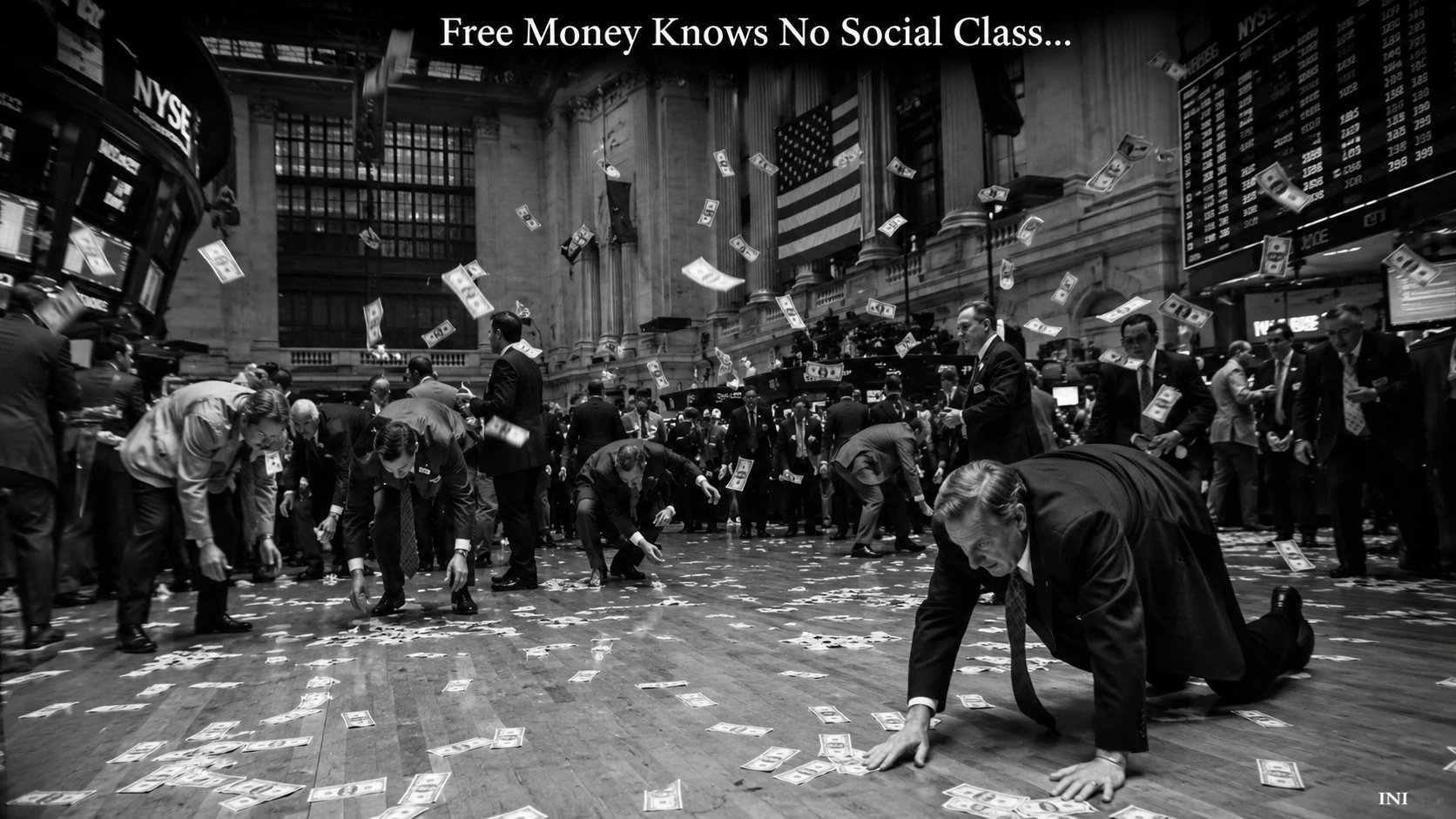
August 24, 1967 — Abbie Hoffman, Wall Street, and the strange pull of free money
A handful of one-dollar bills falls onto the floor of the New York Stock Exchange. At first, people watch. Then someone bends down — and suddenly the dollar is no longer quite the same dollar.
Abbie Hoffman wanted to provoke Wall Street. What he exposed was something rather less convenient: the strange moment when value becomes desire, desire becomes competition, and the crowd quietly makes the ridiculous feel perfectly normal.
Money has a curious quality: it behaves very differently when there is a great deal of it in an account and when a single bill is lying on the floor in front of us.
In the first case, we can talk about it seriously. Investment strategy, returns, risk, liquidity, expectations. We sit upright, use the appropriate vocabulary and generally feel that we are the ones managing the money.
A bill on the floor offers a rather more direct relationship.
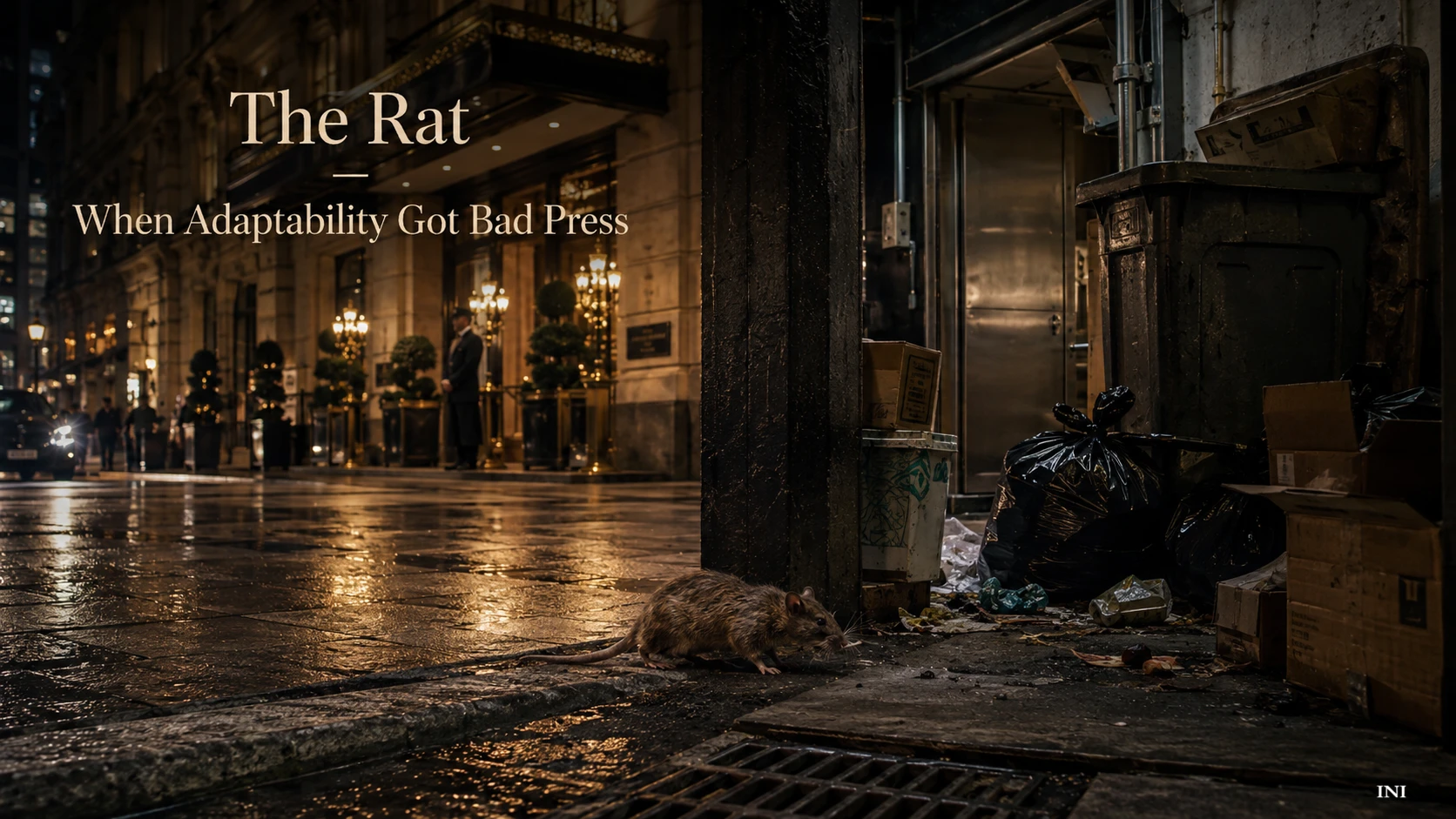
The rat did not build the sewers, the rubbish heaps or the back doors of civilisation.
It simply learned how to live among them.
Perhaps that is why we dislike it so much: it adapts remarkably well to the consequences we prefer to keep out of sight.